Mehra and Braquet’s (2007) article, discusses the top ten barriers that the LGBTQ community faces at universities and the top ten ways that academic LIS professionals can do something about it. The author’s methodology was a series of interviews and “participant observation.” Meanings, that the authors are a part of the community in which they are studying, as both authors are openly gay. Despite some of the drawbacks, such as objectivity, the benefits, such as increased context and rapport, justified this position. The author’s list both their findings and their recommendations as a “top ten list” so that the information being presented is more accessible. Some of the barriers that the authors list are, isolation from a community, invisibility, and lack of representation in the curriculum. The article then recommends things such as Academic LIS actively participating in classes by either teacher or working with other professors, along with using other skills to help create digital and physical resources and safe spaces. The authors conclude with a discussion on the improvements within their own university using some of these steps.
One the things I found interesting in this reading was Mehra and Braquet’s focus on actively working to include LGBTQ students and staff in nondiscrimination policies and law. I found this particularly interesting after reading chapters from Dean Spade’s (2015) book, Normal Life. Spade argued against such reliance on policies and laws because it doesn’t fix systemic oppression, which he argues happens on an administrative level. He argued that reliance on laws and policies actually reinforces systems of oppression, by allowing administrative regulations to shift, rather than change, and possibly even widen the scope of other systems of oppression, such as the prison system. I know there is a bit of a gap between Mehra and Braquet’s (2007) article and Spade’s (2015), and I’m curious if their position has changed? Particularly since Mehra and Braquet were concerned about non-discrimination because of safety. They wanted universities to be safe for all students and staff in the community and believed that safety should start with school policies. I can where both arguments are coming from. One side wants a guarantee of safety as they try to make changes, and the other wants to throw the whole system out in order to start again without systemic oppression. But I think that Dean Spade’s argument certainly more compelling. It makes me consider the comic that I’m sure we’ve all seen comparing Equality to Equity, but a more recent version (Wells, 2016) knocks the fence down completely, and I think that’s what Spade’s argument is really about. It’s about getting rid of the barriers entirely rather than amending them. (or if you want a different idiom, treating the disease rather than just a symptom).
So libraries in general are funded by many of the systems and administrations that are oppressive to minority groups. How do we begin to make changes without just treating the symptom?
Mehra, B., & Braquet, D. (2007). Library and information science professionals as community action researchers in an academic setting: Top ten directions to further institutional change for people of diverse sexual orientations and gender identities. Library Trends, 56, 542-565.
Spade, D. (2015). Normal Life: Administrative violence, critical trans politics, and the limits of law. Durham: Duke University Press.
Wells, Kristopher. [KristopherWells]. (2016, APril 15). Equality. Equity. Liberation. KNOW the difference! #abed. [Tweet]. Retrieved from https://twitter.com/kristopherwells/status/721158763881730048
Tuesday, October 2, 2018

Saturday, September 22, 2018
Reading Reflections
The Diversity Mandate was written by Denise Adkins and Isobel Espinal in 2004. The article about the need to overcome the lack of librarians of color. The authors acknowledge that while LIS as a profession has put effort into becoming more diverse, the increase is not yet enough to reflect actual population numbers and therefore be truly meaningful. The authors then give examples on programs that actively seek recruit students Latino and Native students, it mostly comes down to the programs providing adequate support. The classes offered reflect what students of color might be interested in, and how best to serve their communities, but the programs also offer monetary support. The authors then explain that while LIS programs aren’t seeing a large increase of students of color, they are beginning to see an increase of students of color graduating. They then go one to explain that those numbers are also reflected in the faculty. The authors also list all the programs with the highest rates of graduation of students of color. The article closes with statements about how important funding is to these programs, and a reminder on how the point of libraries is to serve communities and that the best way to do that is have librarians who reflect those communities. This article was published in Library Journal, so the intended audience is other librarians, regardless of focus or type of library, it’s an attempt at impacting LIS as a whole. What stood out to me in this article is the need to support students of color. It shows that part of the problem is the education that LIS students receive.
One of the other articles is Racial Microaggressions in Academic Libraries: Results of a Survey of Minority and Non-minority Librarians written by Jaena Alabi in 2015. This article is an analysis of racism in librarianship because the author sees a need to broaden an otherwise limited pool of literature on the subject. Alabi argues that racism being prevalent and unseen by a majority of librarians (i.e. white librarians), may contribute to burn out among librarians of color. Alabi draws support for this argument from the results of a survey that, while limited, does show that microaggressions do occur and white librarians are not aware Alabi concludes that this needs to be addressed in order to retain librarians of color better. This article was published in The Journal of Academic Librarianship, which is a multidisciplinary journal for academic librarians. What stood out to me in this article is almost same as the previous article.
Both of these articles point to the problem of retention of people of color within librarianship, both students and fully employed librarians. Alabi even mentions that burnout is at the bottom of the inability to retain librarians of color. I think that is also true for the previous article as well. Programs are so white that students of color don’t get the support they need to finish their degrees emotional or monetary. We need to start in investing in librarians of color, and the programs that support them. This needs to be a monetary investment as well as a re-evaluation of libraries themselves. I think part of the way we do this, is by practicing what Melody Hobson is talking about in her Ted talk “Color blind or color brave?” we need to start addressing the problem head on, rather than shying away and ignoring it. Because there is a problem and it isn’t going to go away on its own.
Adkins and Espinal. The Diversity Mandate. Library Journal, Apr 15, 2004. Vol 129 (7) pp 52-54.
Alabi, J. (2015). Racial Microaggressions in Academic Libraries: Results of a Survey of Minority and Non-minority Librarians. The Journal of Academic Librarianship, 41(1), 47–53. http://doi.org/10.1016/j.acalib.2014.10.008
TED. (2014, May 5). Color blind or color brave? | Mellody Hobson [video file]. Retrieved from https://www.youtube.com/watch?v=oKtALHe3Y9Q
Friday, June 29, 2018
Book Review: Trainwreck by Sady Doyle
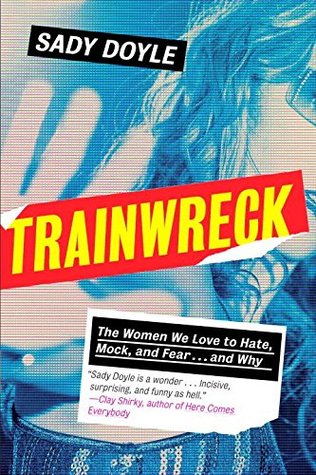
That said, this was not an easy read (or listen). There were a lot of heavy topics discussed such as rape, mental illness, addiction, and suicide.
Friday, December 29, 2017
Book Review: Six-Gun Snow White by Catherynne M. Valente

This was a really cool little novel. It's definitely written in the style of a fairy tale. I really reminded me of reading a Grimm fairy tale. It was the same kind of poetic language, where some details are kind of glossed over because they're not really necessary.
My one issue was the change in Point of View. The first third or so is told in First person, by Snow White. After she runs away, then the perspective switches to an unknown third person. It is explained in the book why it this happens, but it still knocked me out of the flow, and took me a chapter or two to get re-immersed.
Overall this was a fantastic read, and I would recommend it to anyone who likes fairy tales, retellings of fairy tales, and female protagonists who can take care of themselves (and maybe kick some butt along the way).
Sunday, November 19, 2017

Tuesday, September 26, 2017
Ebscohost Instructional Video
I had to make a video for class on how to use a reference database. I had to touch on peer-reviews, boolean searches, and using a truncation. I was also supposed to mention a few other features, that I totally forgot to do. Since I didn't want to waste my first good video... here it is! I'll probably remake it tomorrow!
ANNNNDDDDD
The updated version:
Friday, August 4, 2017
Passive Programming: Upcycled Kindle Case
So this project was definitely not brainstormed out of self-interest. Nope, not even a little... okay, so there was a little bit of self-interest involved. But it is a fun project! It's a just a hardcover book (that you don't mind cutting up), a recycled cereal box, cloth scraps, and elastic. You can find my instructions here.


Wednesday, July 26, 2017
Passive Programming: Sea Glass Lantern
This week's project was recycling a glass jar into a tented votive! The jar pictured used to be a salsa jar and has been painted with Elmer's Glue and food coloring. A pretty easy project overall! Find the trifold with instructions here.


Tuesday, July 25, 2017
Passive Programming: Paper Baskets
So as I was taking last week's project down, I realized that I never took pictures! So here it is. I recycled some automotive magazines (whose pages were like newspaper) into a little storage basket. This project was actually pretty easy, and only a little tedious! Find the trifold with the instructions here.


Sunday, July 23, 2017
Book Review: Jane, Unlimited by Kristin Cashore
Oh my goodness, oh my goodness!

I have been a fan of Kristin Cashore since I first discovered her book Graceling. (If you like fantasy, and books with a female protagonist go read it right now!) Once I finished that series I was so disappointed to find out she hadn't written anything else. So I was super excited when she first announced that she was writing another a book. Like some of the best news I got in an otherwise truly terrible year.
I got to read this book early thanks to NetGalley. (The best thing that happened in a not so great week. Anyone seeing a pattern here?) And my goodness, this book did not disappoint!
Jane is a recent orphan, who is just trying to get by. Until Kiran shows up. Kiran is a former tutor, and she invites Jane back to her family home, called Tu Reviens, on a private island somewhere off the coast of New York. This is where Jane's adventure begins.
There are multiple endings throughout the book and each journey is more fantastical and weird than the one before it. I think that is what makes this such a great read though. You can have this story any you want it: adventure, spy thrillers, space pirates creepy children’s book. If you can dream it, this book probably has it.
Despite being about some tough topics, such as the loss of a loved one, and trying to find a place to belong, this book makes it easy to handle these topics. If you are a fan of Sci-Fi (and especially Dr. Who) you need to read this book!
Thursday, July 13, 2017
Passive Programming: Plastic Yarn
This week's project is a way to recycle shopping bags and makes it into two-ply yarn. The only problem with this project is having to re-wind this little ball of yarn (I did not foresee that adults would be the patrons to unravel the yarn). Find the trifold with instructions here.
I also created a better display for previous week's projects!

Wednesday, July 12, 2017
Passive Programming: Egg Carton Roses
Last week's activity was recycling egg cartons into roses, and I think it came out really well! and between patrons taking handouts and giving compliments, I think this is one of the more popular programs! Find the trifold with instructions here.


Tuesday, June 27, 2017
Passive Program: Summer Reading 2017
Summer reading has officially begun! This year's theme is Build a Better World. So my intention is to have small DIY projects that embrace "Reduce, Reuse, Recycle" in order to be better community members. Each project will be tested out by me to make sure that they are easy and doable projects.
This week was a T-shirt tote. No sewing necessary! I did my research and read through at least three different blogs that did the same project, and I combined the instructions from two of them (find them here and here) to create my own in handout form.


Monday, June 26, 2017
To a Boy Named Harry
I recently shared the following story with a coworker who told me that this really was an inspiring story, and would have shared it with social media immediately had they had my permission. Since I’m not at all ashamed of it, I will do the hard part of putting it into writing.
Anyone who knows me, knows I am a voracious reader. However, reading has not always come easily to me. I was a bit of a late bloomer but it went mostly unnoticed by my teachers for a while. I’ve been told that I managed to memorize my favorite books. I don’t remember how, but eventually, my ruse was found out. I like to imagine that two pages stuck together while turning but I was still “reading” what was supposed to come next. I do remember the summer going into second grade: I spent every day going to school to be tutored in reading.
Even after that all that was done and school had begun, I was still behind. It was agonizing. Any book without pictures, and especially chapter books, felt more like punishment than anything else. I struggled with anything more advanced than Amelia Bedelia. It was definitely not something that I would have done for fun. I never finished the books that the other kids my age were reading. I think I finished one Magic Treehouse book under a threat of some sort. My mother was at her wit's end. She didn’t understand the disconnect: she had learned to read in preschool and my older sister in kindergarten. She was convinced that if I just read the right book, I would come to love it.
Finally, at the end of second grade, she heard about a new children’s book. It had come out the year before. She read it (because she always read the books she made us read, she thought it was only fair) and knew that I had to read it. Shortly thereafter, she dragged me to a bookstore and bought me Harry Potter and the Sorcerer's Stone and insisted I read it. I was so angry that she was trying to foist another book on me. But she didn’t give me a choice. She was going to consider it school work. I grudgingly started it, and promptly lost it, for months.
It probably wasn't an accident, though I have no memory of doing it on purpose. Eventually, the book was located and I started to read it in earnest. I finished the first chapter, and then the second, and suddenly I was on chapter sixteen, Harry was facing Fluffy and going through the trapdoor. By the end of the book, I was sold. I LIKED reading this book. After Harry Potter, I finally understood that reading was not a punishment, but rather one of the best things that would ever happen to me. Flash forward eighteen years and I work in a library hoping to make it a professional career. And I owe it all to my mother and a boy named Harry.
Thursday, June 8, 2017
Passive Programming: Summer Fun! (Also SHE LIIIIVES!)
Hello all, Its been quite a while! Between forgetting to take photos, not loving what I've created, and large library wide events (I'm looking at you Harry Potter Day and Free Comic Book Day) I just haven't been able to get myself together enough to post something!
However, I've finally done it! I got together a display to get patrons ready for summer and summer reading!
However, I've finally done it! I got together a display to get patrons ready for summer and summer reading!
 |
| Small summer inspired poster and Tri-fold. |
 |
| I could have borrowed something straight from online, but I made my one. I think it could have been improved, but I had already printed it, so its the one I went with. |
 |
| This includes tips on how to keep cooler in hot weather, what symptoms lead to heat exhaustion (and what to do), and a list of free or low cost activities in the area this summer. |
 |
| Everything on the poster is included in this tri-fold. |
Monday, February 27, 2017
Passive Programming: Civics Jeopardy
I've been moving forward with the theme of educational passive programs. For February (I know I'm so late posting this! But it's tax season and I've been busy!) I wanted to do a game of some sort. And I have been dying to do something with the bill of rights, unfortunately I couldn't quite figure out how to do just the bill of rights. Instead, what I came up with was a jeopardy game with questions based on the citizenship test. Since the U.S. Citizenship and Immigration Services offers a free practice test online, it wasn't difficult to pull this together. Trying to figure out how to make the board, however took forever.
 |
| I lucked out, apparently Jeopardy held a special in Washington DC, So I didn't even have to work too hard on this sign. |
 |
| This is the third version I came up with for the board. Each question in on an envelope with the answer inside (hence the white tabs). |
 |
| Also made little answer sheets, that patrons could keep a tally of their answers, to see if they would pass. Since people taking the actual citizenship test need a score of 60%to pass, the same goes here. |
Wednesday, January 4, 2017
Passive Programming: Fake News
 |
The goal that my boss has set out for the team this year is to try to educate our patrons.
Naturally, the first thing that came to time has been the rise of fake news, and how fake news has been influencing many people's decisions and just wreaking havoc all over the place.
I decided that we should teach our patrons how to differentiate between what's fake and what's real.
Thanks to an outside source, I didn't have to do too much work, this project was mostly just converting from images to text!
This is the display as whole. The three papers lying down are three headlines, two are false. Patrons are supposed to guess which is the real headline. If you flip them over, they display the answer.

 |

Thursday, December 15, 2016
Book Display: Star Wars

They only idea I could come up with on the fly was the next big block buster film. Which is Rogue One.
(I really wanted to dedicate something to Hidden Figures, but the only book we have is the one the movie is based on, which is out for the foreseeable future...)
The top shelf is fiction, and the rest is non-fiction: behind the scenes, schematics, and trivia. Since Rogue One takes place right before New Hope, I tried to keep everything to the original trilogy, but a few of the books cover more than just the original films.
Also, since the sign doesn't translate well in this picture, it says: "A long time ago in a galaxy far, far away, A new movie premiered..."
It's just yellow word art made to look like the opening credits (the background is just a picture of stars).
Monday, December 5, 2016
Passive Program: Self-Care Survival Guide
So this may just be my favorite display so far. And, ironically enough, the most stressful. I kept getting ideas about how to make it better, so it just kept growing. But it was definitely worth it.
I wanted to do something for the holidays that I hope hasn't really been done before. My first thought was a tongue in cheek "how to survive the Holidays display" and going through holiday by holiday. But after starting to try to put it together, it evolved into this. I also didn't want patrons to complain about a war on holidays or choosing only one holiday, or forgetting to mention another, so I made sure it was just winter themed. The guides make mention to the most stressful time of the year, but that's it.


I wanted to do something for the holidays that I hope hasn't really been done before. My first thought was a tongue in cheek "how to survive the Holidays display" and going through holiday by holiday. But after starting to try to put it together, it evolved into this. I also didn't want patrons to complain about a war on holidays or choosing only one holiday, or forgetting to mention another, so I made sure it was just winter themed. The guides make mention to the most stressful time of the year, but that's it.


 |
| This is mostly an expansion of what is in the tri-fold I made with resources that can be found for free online or in the library. |
 |
| This is the Tri-fold. It full of tips on to make yourself feel better, and reminder that you don't have to kill yourself to make everyone else happy. |
 |
| The resources that either didn't fit on the board (yellow) or didn't fit into the tri-fold because they were thought of after (purple)
There's still more thing I need to add to that display, because apparently it will never actually be finished. What I want to add is one more small hand out with all the online resources.
|
Sunday, November 20, 2016
Last minute Thanksgiving passive programming!
I really didn't like how the last program turned out, so I came up with something for Thanksgiving instead!


Subscribe to:
Posts (Atom)